

Puppies and kittens need to be dewormed multiple times during their first months of life, not just once. Intestinal parasites are among the most common medical issues in young dogs and cats, and most are born already infected through the placenta or pick up worms from their mother’s milk within days of birth. A single dose only clears the worms present at that moment, which is why young pets need a series of treatments paired with fecal testing to catch new generations as they emerge. Treating early and on a repeating schedule keeps parasites from quietly stunting growth, draining nutrients, or causing the kind of severe anemia that hits the smallest patients the hardest.
Sonoran Sky Pet Hospital provides wellness and preventive care for puppies and kittens in Mesa built around early parasite screening, fecal testing in our in-house lab, and a deworming plan that matches your pet’s age and lifestyle. We can identify exactly which parasites are at work, walk you through what each finding means, and build the next steps together so you understand the reasoning behind every dose. If your puppy or kitten is due for their next check-in, reach out and we will get them on the calendar.
Deworming in a Nutshell
- Most puppies and kittens are born already carrying worms, so deworming starts young and repeats every couple of weeks rather than happening just once.
- Standard dewormers only cover certain worms; protozoa like coccidia and giardia need their own tests and their own medications.
- Fecal testing tells us exactly what your pet has, because no dewormer treats everything and no single test finds it all.
- Year-round monthly prevention that covers heartworm alongside intestinal parasites is the current standard of care, not a seasonal add-on.
Can a Healthy-Looking Puppy Still Be Full of Worms?
Parasite infections usually look like nothing because most infected puppies and kittens act completely normal until the worm load is already heavy. The early signs, when they show up at all, are vague and easy to blame on something else. Only testing paired with proactive deworming reliably catches the problem before it does real damage.
Intestinal parasites in young pets rarely announce themselves, because even when something does seem off, it almost never screams “worms.” That is why the vague clues are so easy to miss. A bout of soft or intermittent stool gets blamed on a diet change or a stressful week far more often than on the worms actually causing it. A dull coat, a pot-bellied look, slow weight gain, a little less energy at playtime: each one is easy to explain away. That is why we do not wait for symptoms. Screening a stool sample and deworming on schedule catches infections while they are still small and quiet, which is exactly when they are easiest to clear.
What’s Living in There? Meet the Usual Suspects
The parasites we see most often in young dogs and cats fall into two broad groups: true worms, like roundworms, hookworms, whipworms, and tapeworms, and single-celled protozoa, like coccidia and giardia. They spread differently, cause different problems, and, importantly, do not all respond to the same medication.
What Do Roundworms and Hookworms Do?
Roundworms are the single most common intestinal parasite in young pets, and their eggs are remarkably tough, surviving in soil for years and making reinfection almost effortless in a yard where infected animals have been. Both roundworms and hookworms pass from the mother before or just after birth, but hookworms are the more immediately dangerous of the two because they feed on blood and can drain a tiny puppy or kitten into life-threatening anemia. In a two-pound patient, that blood loss adds up fast, which is one more reason we start deworming so early.
What About Whipworms and Tapeworms?
These two round out the worm list, and each comes with a catch. Whipworms are mostly a dog problem that climbs with outdoor exposure, and because they shed eggs in fits and starts, a single fecal test can come back clean even when they are present. Tapeworms get in when a pet swallows an infected flea during grooming, which means clearing the worm never sticks unless the fleas themselves are handled at the same time. Breaking that connection means interrupting the whole flea life cycle, since the bulk of the population is sitting in the carpet and bedding as eggs and larvae, not riding on your pet.
How Are Coccidia and Giardia Different?
Coccidia and giardia are not worms at all, and that difference matters more than it sounds. Coccidia is a single-celled organism rather than a worm, which is exactly why the routine dewormer that clears roundworms does nothing for it. Giardia is another protozoan that slips past ordinary deworming and needs a specialized fecal test to catch and a different drug to clear. Giardia is also stubborn: pets often pick the parasite right back up off their own contaminated coat or stool, so bathing and cleanup have to run alongside the medication. A few practical steps break that cycle:
- Bathe your pet toward the end of treatment to wash cysts off the coat, focusing on the rear.
- Pick up stool promptly and daily, keeping the yard and litter box clear.
- Disinfect hard surfaces and wash bedding in hot water where cysts can linger.
- Wash your own hands after handling your pet or cleaning up, since giardia is easy to spread around a household.
A Test and a Treatment Answer Two Different Questions
Fecal testing is essential because deworming and diagnosis answer two different questions. A dewormer treats; a fecal test tells us what is actually there. That is the whole case for fecal testing for pets: no product covers every parasite and no single test finds them all, so targeted treatment starts with knowing what you are up against.
The type of test matters, too. A standard fecal flotation concentrates eggs so they float up and can be spotted under the microscope, and it catches the common worms well. But parasites like whipworms and giardia shed inconsistently, so a clean result on one sample does not always rule them out. When the picture does not fit the results, if your pet comes from higher-risk situations like a shelter or was a stray, or if your pet has stubborn or recurring diarrhea, we may repeat the test or run a more sensitive antigen test that detects the parasite even when eggs are not showing that day. Our puppy and kitten wellness plans include two fecal tests and two dewormings to get them started off right.
What Does a Deworming Visit Actually Involve?
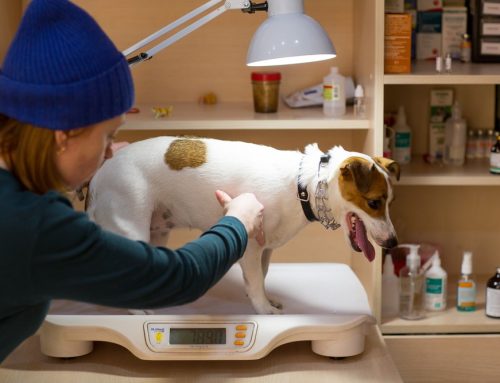
A deworming visit is usually quick and low-stress. It centers on a physical exam, a weight check so dosing is accurate, fecal testing when it is warranted, and giving the medication. Dewormers come as flavored chews, tablets, liquids, and topical products, so we can match the format to a wiggly patient.
The weigh-in matters more than it looks. Doses are calculated from the number on the scale, and puppies and kittens change size week to week, so a hands-on exam and weight check keeps every dose right for who they are that day. Most pets breeze through it. Some have a mild, short-lived upset stomach or a soft stool afterward, and it is common to see dead worms in the stool for a day or two, which looks alarming but simply means the medication is working. No worms doesn’t mean it didn’t work; many are too small to see with the naked eye. A quick call is worth it if you notice repeated vomiting, ongoing diarrhea, lethargy, or pale gums, and you can always give us a call with questions between visits. If something serious comes up while we are open, our team also handles urgent and emergency care during our open hours. Outside those hours, please head to the nearest after-hours veterinary hospital.
When Does the Deworming Clock Start, and How Fast Does It Repeat?
Most puppies and kittens should begin deworming around two weeks of age and continue on a repeating schedule through their early months. Waiting for symptoms before you treat means treating too late.
That timing surprises a lot of new pet families. You bring home a bright, wiggly eight-week-old kitten who looks the picture of health, and it feels strange to hear she needs medicine for worms she shows no sign of having. But that is exactly the point. The parasites got there first, often before you did, and the youngest patients tolerate a heavy worm burden the least. Starting early and repeating on schedule is how we stay ahead of them instead of chasing them.
Why Can’t a Single Dose Just Finish the Job?
One dose is not enough because a dewormer only kills the adult parasites present in the gut at that exact moment. It does nothing for the immature larvae still developing in your pet’s tissues, and those stragglers keep maturing into new egg-laying adults for weeks. Clearing them takes several rounds, timed to the parasite’s life cycle.
Here is the biology in plain terms. Roundworm and hookworm larvae can lie dormant in a mother’s body, then reactivate during pregnancy and pass to her litter. Once a puppy or kitten is infected, waves of them migrate through the body and arrive in the intestines in batches, not all at once. A single treatment mops up whatever has reached adulthood so far. A few weeks later, the next wave has matured and needs its own dose. Young animals also reinfect easily from a contaminated environment, so the repeating schedule is about catching each new generation before it can start shedding eggs of its own.
Skip a round and you give that wave time to start shedding eggs, seeding the environment and setting up reinfection. Deworming does not stand alone, either. It fits inside the broader rhythm of early-life visits, alongside vaccines and growth checks, which is why our juvenile wellness plans for puppies and kittens bundle these first appointments together so nothing important slips through the cracks during those busy first months.
Do All Pets the Same Age Carry the Same Risk?
Your pet’s risk depends heavily on how they actually live. The same age and species can carry very different exposure depending on where they go, what they hunt, and who they hang around. Testing and prevention frequency should be dialed to that real-world picture rather than a one-size-fits-all default.
Some day-to-day habits push risk up, and others hold it down:
- Higher risk: outdoor access, hunting or eating rodents, contact with other dogs and cats, time with livestock, daycare and boarding, and busy multi-animal households.
- Lower risk: mostly indoor life, little time around unknown animals, prompt stool cleanup, and consistent monthly prevention already in place.
The wellness visit is where this gets personal. A kitten who will live entirely indoors and an outdoorsy pup who visits the dog park daily do not need identical plans, and the exam is where we sort that out together. We help you build a prevention plan around your pet’s lifestyle so the schedule fits the animal in front of us, not a generic template.
Keeping Parasites Out Between Visits: The At-Home Side
Prevention does not stop when you leave the exam room, and much of the day-to-day work happens at home. Roundworms, hookworms, giardia, and some tapeworms are zoonotic, meaning they can pass from animals to humans, and young children and anyone with a weakened immune system face the greatest risk. The good news is that basic hygiene closes off most of the transmission routes.
Kids play in the dirt and put hands in their mouths and puppies lick faces, which is the exact behavior these organisms exploit and why parasites can spread to people. A few household habits shrink the risk substantially:
- Wash hands after handling pets, cleaning up stool, or gardening, and coach kids to do the same.
- Scoop the yard and litter box daily so eggs never get the days they need to become infectious.
- Cover sandboxes and keep children out of areas where pets relieve themselves.
- Keep pets on prevention and current with deworming, since a parasite-free pet cannot pass anything along.
- Wear shoes in areas where pets have defecated.

Does Prevention Really Need to Run All Twelve Months?
Year-round prevention matters because parasites do not take the winter off, and any gap in coverage is a gap a parasite can walk through. Monthly dosing has replaced the old seasonal, warm-months-only thinking as the standard of care, and it is the simplest way to keep a young pet protected as they grow into an adult.
Year-round parasite prevention earned that status precisely because plenty of parasites stay active straight through the months that feel too cold or too dry to worry about. Here in the Valley, mild winters mean fleas, ticks, and mosquitoes barely slow down, and parasite eggs can live in the soil for several years.
Heartworm prevention is the clearest example of why gaps matter, since the disease is simple and cheap to prevent month to month but expensive, drawn-out, and genuinely dangerous to treat once it takes hold. The good news is that many monthly products cover heartworm alongside intestinal worms in a single dose, which folds the whole plan into one easy habit.
Deworming Questions New Pet Families Ask Us Most
Can I use an over-the-counter dewormer instead of seeing the vet?
Usually not on its own. Store products often target only one or two worm types and rarely touch protozoa like coccidia and giardia, so a real infection can be left half-treated. Without a fecal test, we cannot know which parasites are present, so the safest path is having us confirm what is there and match the medication to it.
Dosing by weight also matters in tiny patients, where a guess can be too little or too much.
My puppy already had a dewormer from the breeder. Do we still need more?
Almost always, yes. That first dose was a great start, but it only cleared the adult worms present that day and did nothing for the larvae still maturing in the tissues. New waves reach the gut over the following weeks, which is why the schedule repeats every couple of weeks through the early months. Bring the breeder’s records so we can pick up right where they left off without doubling up or missing a round.
Are dewormers safe for such young animals?
Yes, the products we use are well tested and safe for puppies and kittens when dosed correctly for their weight, which is exactly why the weigh-in at each visit matters. Side effects are usually mild and brief, like a soft stool or a little tummy upset. The far bigger risk to a young pet is leaving a parasite infection untreated, especially blood-feeding hookworms in the smallest patients.
Bringing the Three Pieces Into One Schedule
Strong parasite protection rests on three pieces that lean on each other: early repeated deworming through the first months, monthly prevention going forward, and regular fecal testing to confirm it is all working. Drop any one of them and you leave the kind of gap parasites are very good at finding. Together, they keep your growing pet ahead of the problem instead of reacting to it.
You do not have to map this out on your own. Sit down with our veterinary team and we will build a schedule around your pet’s age, lifestyle, and history, then adjust it as they grow. When your puppy or kitten is ready for their next step, request a visit and we will get them started.








Leave A Comment